

Sinan Pasha Mosque is an active place of worship in Prizren’s Historical Centre, in the Shatërvan area. This Ottoman-period landmark dates to 1615, and sits about 5.6 km from Hotel OK.
- Location: Sheshi i Shatërvanit, postal code 20000, in the Shatërvan area.
- Historical context: The Kosovo cultural heritage register dates the mosque to 1615.
- Access: It remains an active place of worship; official visitor hours for non-worship visitors are not available.
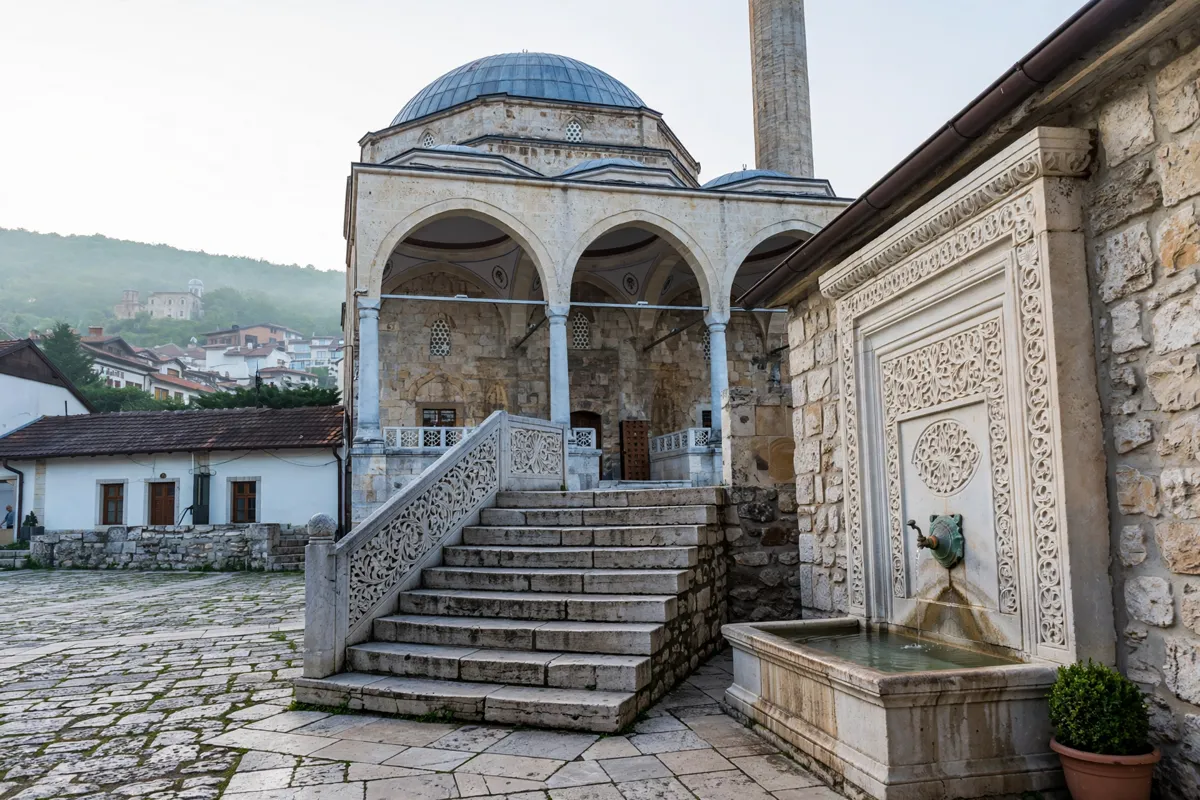
- Nearby feature: A decorated stone fountain stands beside the mosque’s stairs.
Where is Sinan Pasha Mosque in Prizren?
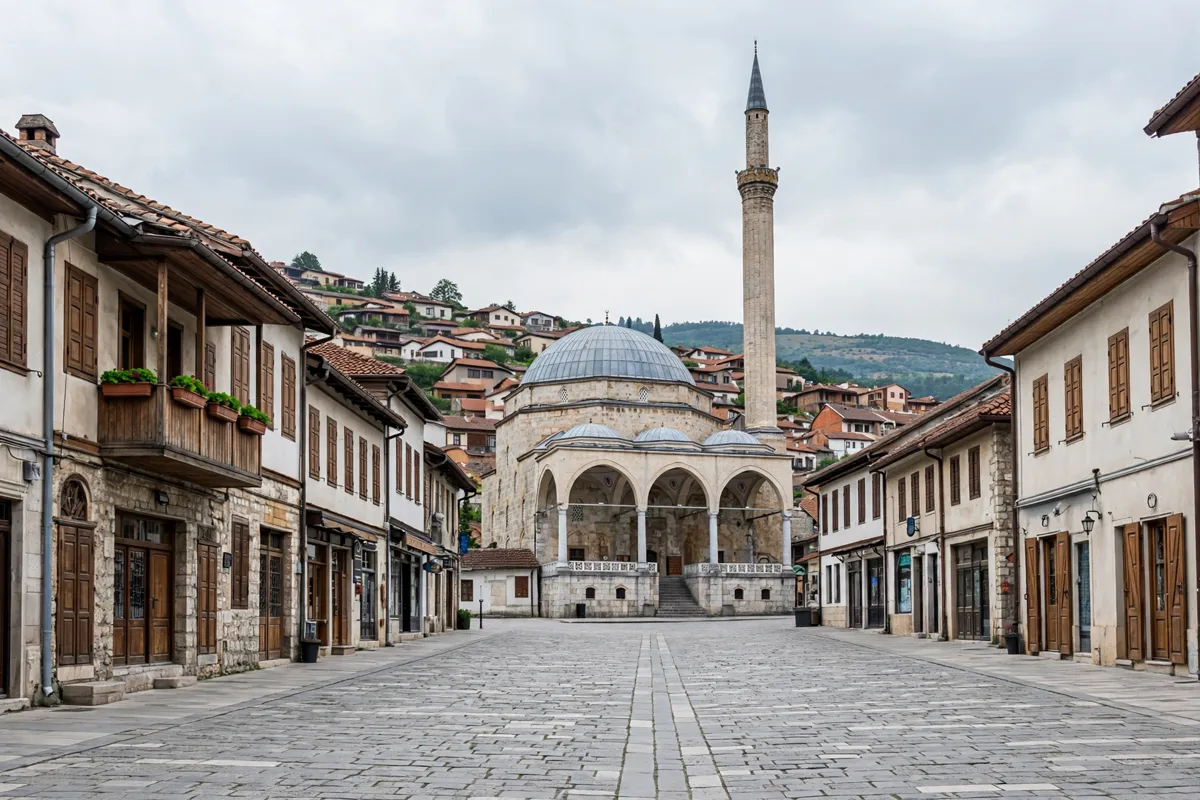
Sinan Pasha Mosque is at Sheshi i Shatërvanit in the Shatërvan area of Prizren’s Historical Centre. Its position in the historic zone makes it a natural point to include while exploring the centre; a one-day itinerary for Prizren’s historic centre can help you place it among other central sights.
The city tourism site identifies the Shatërvan fountain as being near the mosque. Beside the mosque’s stairs, a decorated stone fountain sits on the right side of the entrance. It is used for ablutions and as a drinking-water source.
What makes the mosque’s architecture distinctive?
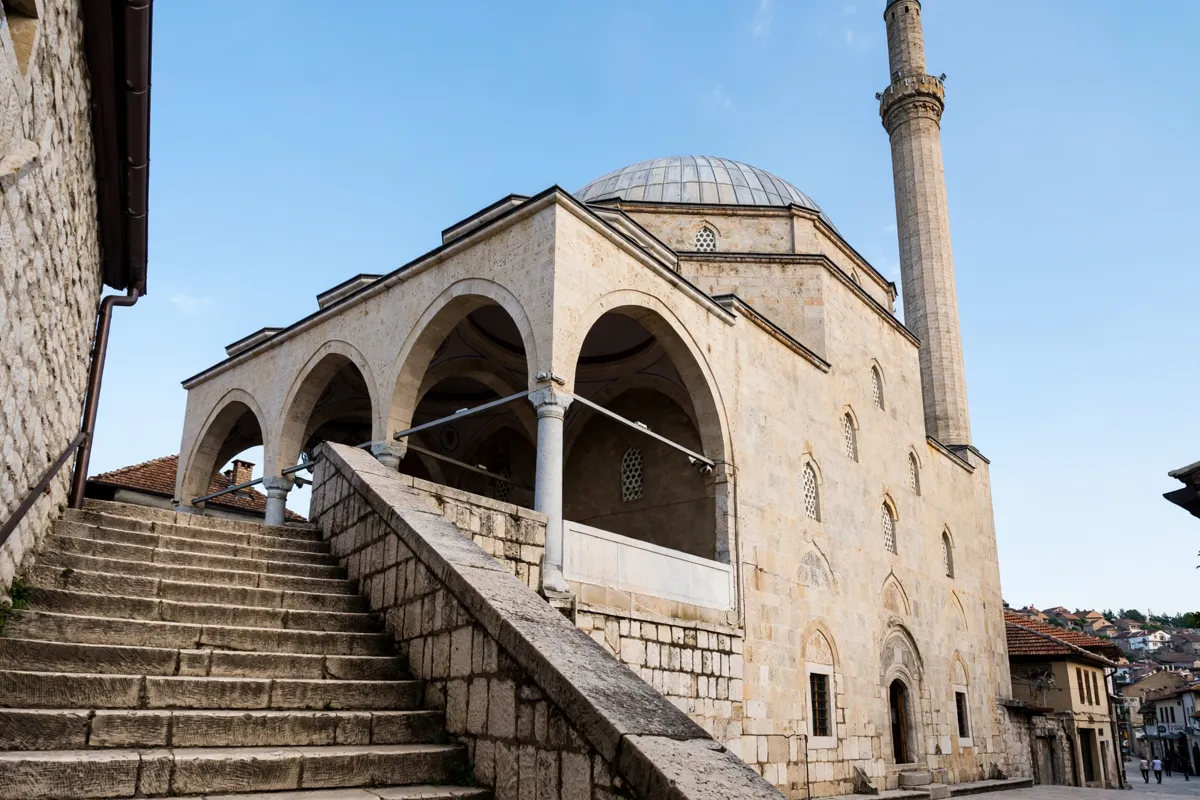
The mosque combines a distinctive layout with Ottoman-period stonework and painted decoration. The Kosovo cultural heritage register classifies it as a 17th-century architectural monument and identifies Sofi Sinan Pasha as its patron.
The building stands on an elevated foundation, reached from the north by a carved stone staircase. Its rectangular plan has a niche on the southeastern side, a layout the register describes as different from other mosques in Kosovo.
Chiselled river stones joined with lime plaster form the building, while chiselled stone covers the exterior. The register says this facing stone is assumed to have come from the ruins of the Monastery of Archangels.
The city tourism site describes the interior as a unified space beneath a dome painted with floral and geometric motifs in three stages. The first two stages date to the 16th–17th centuries; the third, from the 20th century, has a Baroque style with blue motifs.
What is the mosque’s history?
The mosque’s history includes changes in use, damage and restoration. It served religious needs until 1912, then Bulgarian and Serbian armies used it to store ammunition during the Balkan Wars and the First World War. The building was severely damaged in 1919, including the demolition of its porch.
After renovation in 1968–1969, it became a Museum of Oriental Inscriptions. Mural paintings were further restored and conserved from 1973 to 1978. Interior and exterior restoration and conservation took place from 2007 to 2011 with a donation from the Turkish Agency for Cooperation and Development (TIKA).
The mosque reopened for worship in 2011. Work to arrange its southern courtyard followed in 2013, also with a TIKA donation, and included recreational areas.
What should you know before visiting?
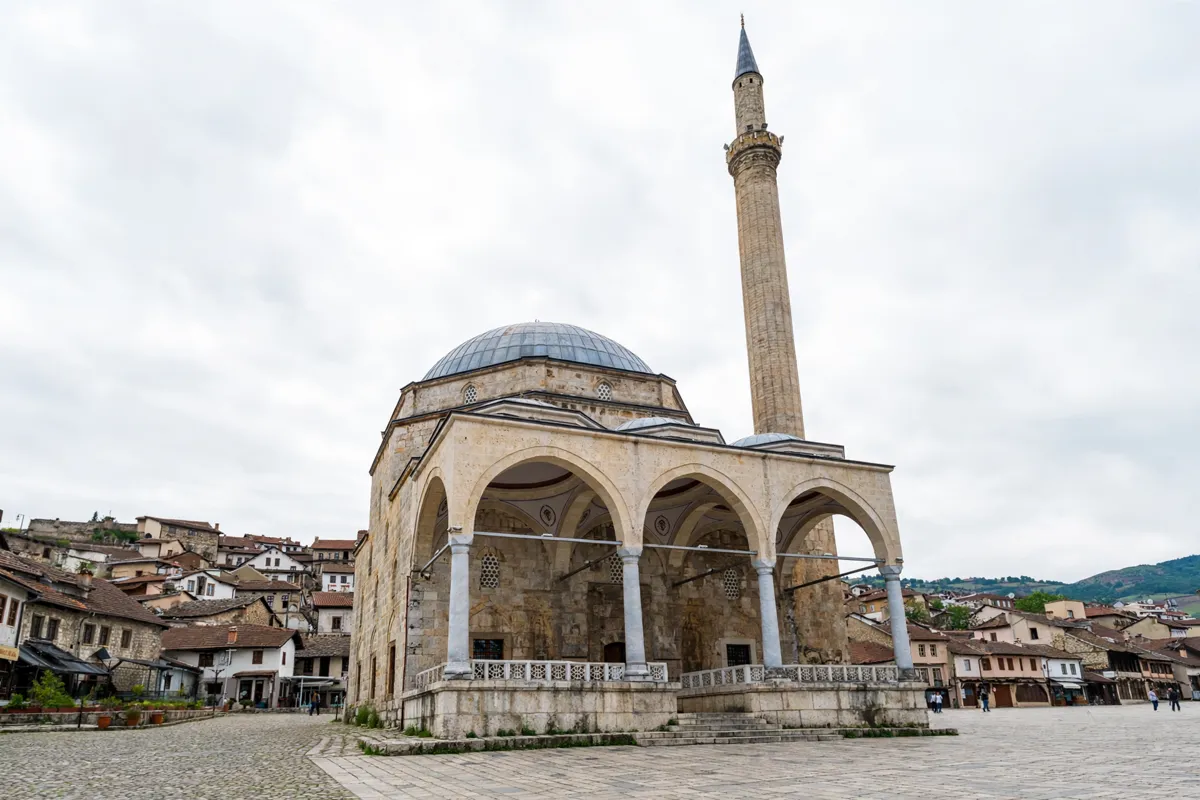
Sinan Pasha Mosque is an active place of worship, so plan your visit with that in mind. Official visiting hours for non-worship visitors, and official guidance on dress, photography or conduct during prayer times, are not available. Check the official site before you go for current visitor information.
The heritage register records the mosque as under permanent protection, dated 1599/48. It also records temporary protection for 2014–2015.
What else can you see nearby?
The mosque is in Prizren’s Historic Zone, with the Shatërvan fountain nearby. Ura e Gurit, the old stone bridge in Prizren, is another historic-centre subject to work into your plans; the guide to Ura e Gurit and its history covers the landmark.
FAQs
When was Sinan Pasha Mosque built?
The Kosovo cultural heritage register dates the mosque to 1615 and identifies Sofi Sinan Pasha as its patron.
Can non-worship visitors go inside?
The mosque is active for worship, but official visiting hours for non-worship visitors are not available. Check the official site before you go.
What is the mosque’s dome decorated with?
The dome has floral and geometric motifs painted in three stages, including a 20th-century stage with Baroque-style blue motifs.
Is there a fountain by the mosque?
Yes. A decorated stone fountain stands beside the stairs, on the right side of the entrance, and is used for ablutions and as a drinking-water source.