

The Church of the Holy Saviour in Prizren is a medieval church in Nënkalaja, on the steep slope below Prizren Fortress. Its stone-and-brick exterior and layered history make it a distinctive stop in the old town, especially if you’re continuing uphill toward the fortress.
- Setting: Nënkalaja, below Prizren Fortress
- Local heritage-database name: Kisha e Shën Spasit
- Other names: Saint Saviour and St. Spas Church
Where is the Church of the Holy Saviour in Prizren?
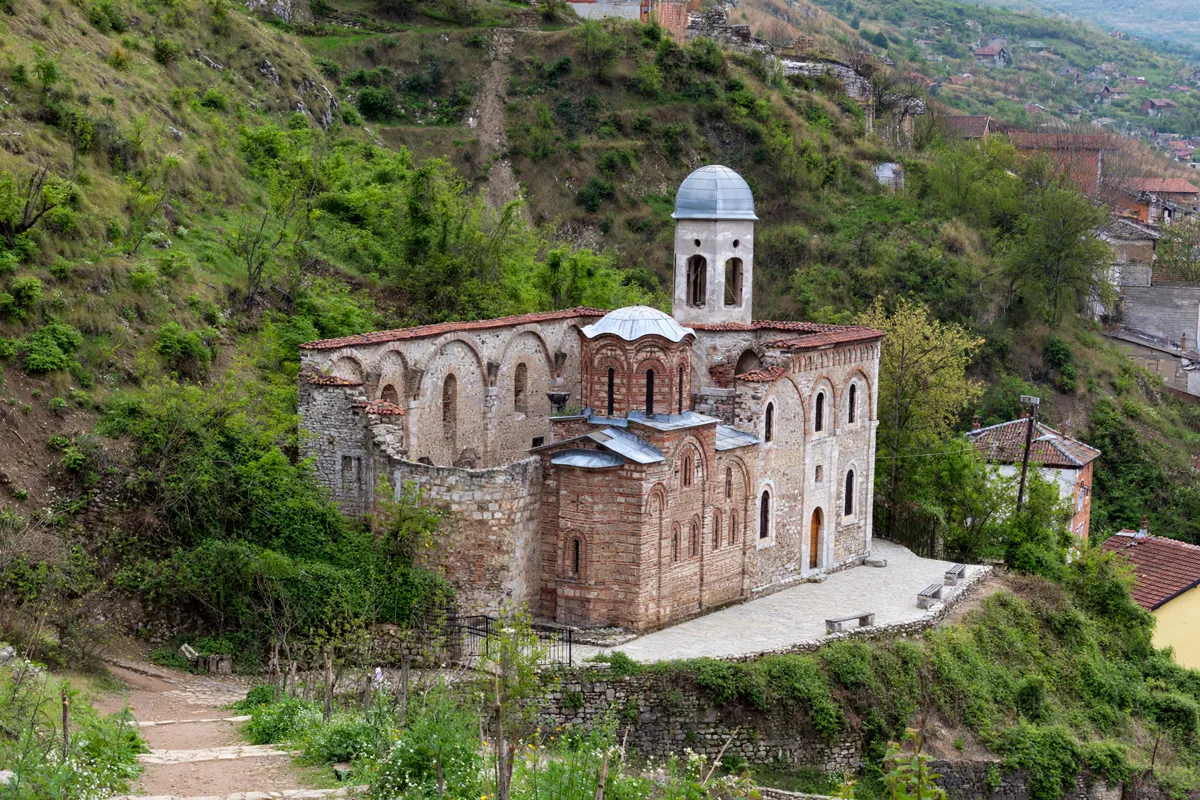
The church stands in Prizren’s old town, below the fortress on a steep site in Nënkalaja. Its position on the slope makes it a natural point to include as you make your way toward the fortress, rather than treating it as a separate stop across town.
From a four-star hotel in Prizren, the church is about 5.5 km away. A secondary directory gives its address as 6P5V+78G, Nuri Sherifi, Prizren.
What is the church’s history and architecture?
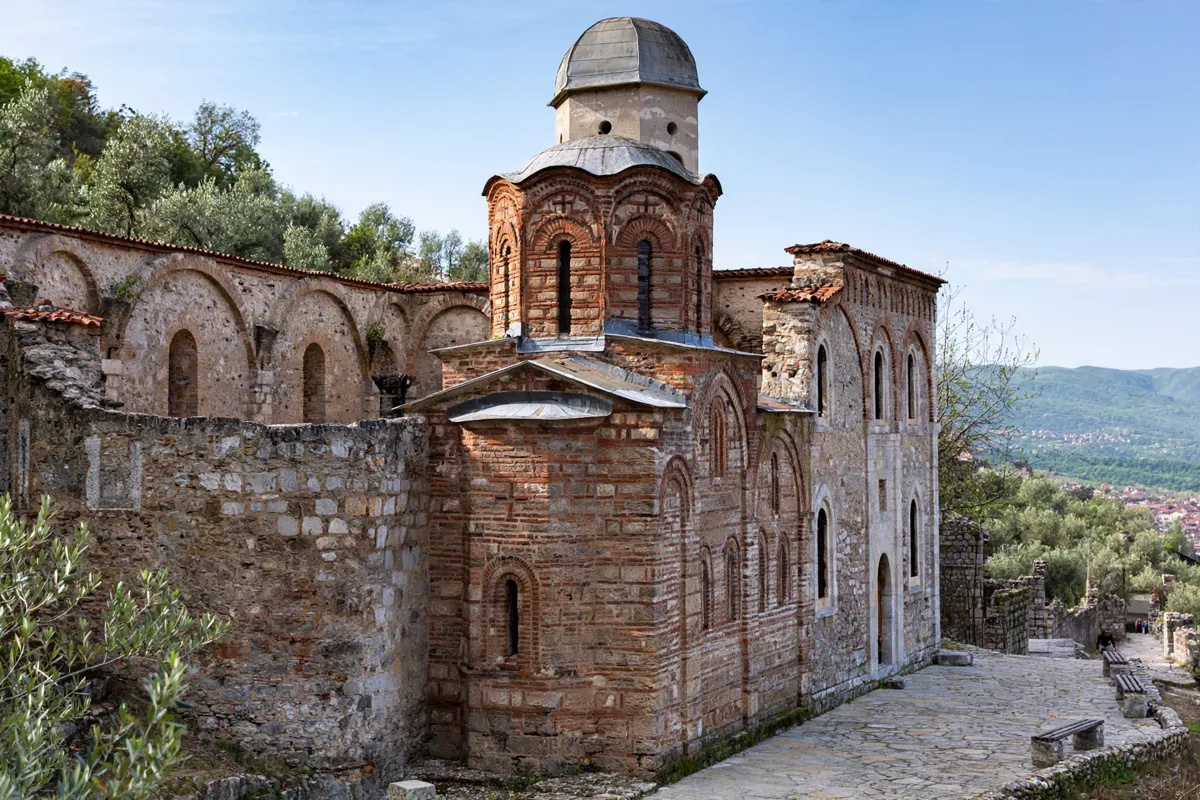
The Church of the Holy Saviour dates to the 1330s. A Kosovo heritage record gives the dates as 1333–1335, while UNESCO uses the rounded date 1330. A charter from 1348 records the church’s donation to the Monastery of the Holy Archangels.
The building has a single nave, a western entrance chamber and an eastern sanctuary ending in an apse. A dome rises on an eight-sided drum. On the exterior, courses of stone and brick alternate, with terracotta details around openings and arches.
The church’s paintings were completed in two campaigns: the sanctuary paintings date to the 1330s, and another group to 1348. Later construction changed the setting around the medieval building. Work began in 1836 on a much larger Church of the Holy Trinity, built around it, but the enlargement was never completed. Its walls and bell tower remain.
What should you know about access and conservation?
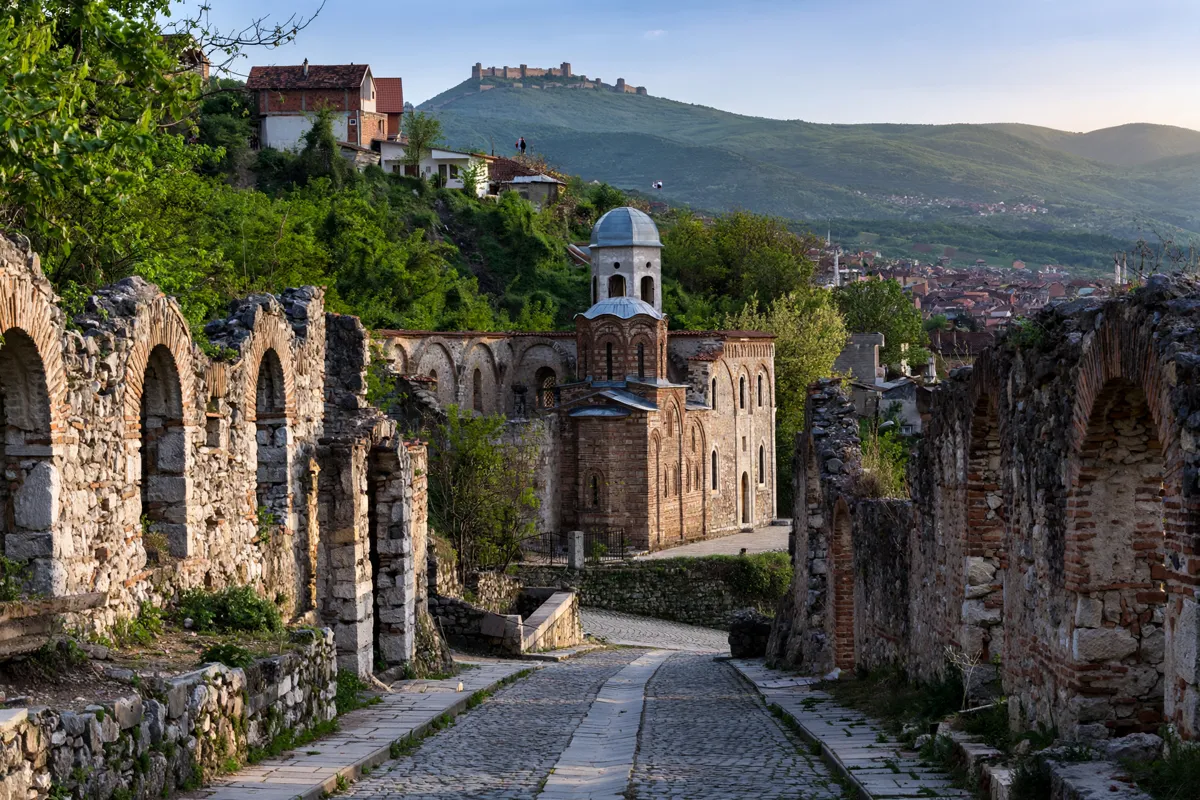
Check the official site before you go for current visitor access and opening hours.
The church was severely damaged during the March 2004 violence in Prizren. UNESCO ran a conservation project from 2006 to 2009, including restoration of wall paintings, professional training and cooperation among specialists, clergy and the local community. A heritage register also records work on the walls, roof and interior in 2010–2011.
If you’re planning a broader route, the Fortress of Prizren is directly uphill from the church.
How can you add the church to a Prizren walk?
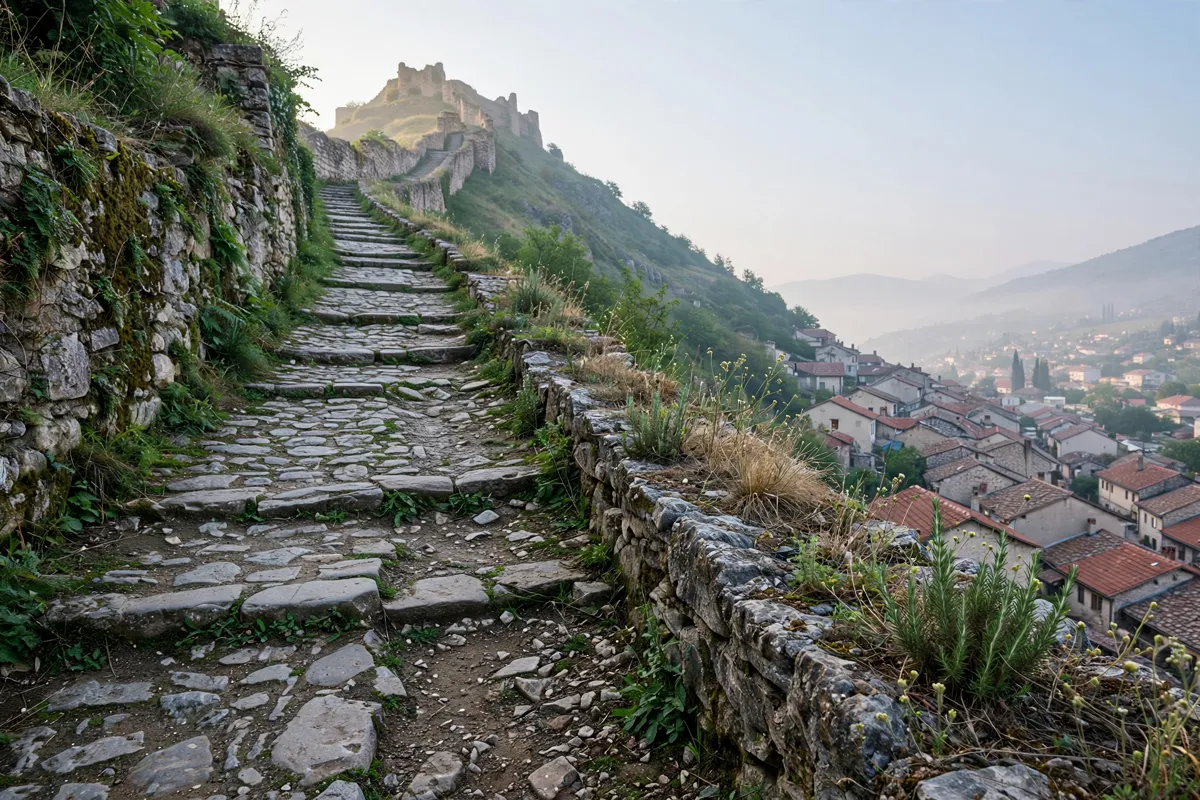
Place the church on the uphill stretch of a walk toward Prizren Fortress: its location below the fortress lets you connect the two without crossing to a different part of town. The slope is steep, so allow for the uphill approach as you plan your route.
A one-day itinerary for Prizren’s historic centre can help you place the church within a wider old-town plan.
For a different nearby religious landmark, St. Nedelja Church in Prizren has its own location and access details.
FAQs
What is another name for the Church of the Holy Saviour?
It is also known as Saint Saviour or St. Spas Church. Its local heritage-database name is Kisha e Shën Spasit.
Can you visit the church interior?
What remains of the unfinished Church of the Holy Trinity?
The larger church project began in 1836 around the medieval church but was left unfinished. Its walls and bell tower remain.